November 20, 2022
Plantar Fasciitis
Plantar fasciitis is the most common cause of heel pain, affecting millions of people every year. If you've ever taken your first steps in the morning and felt a sharp, stabbing pain in the bottom of your heel, you may already know what it feels like — even if you didn't know the name.
What Is the Plantar Fascia?
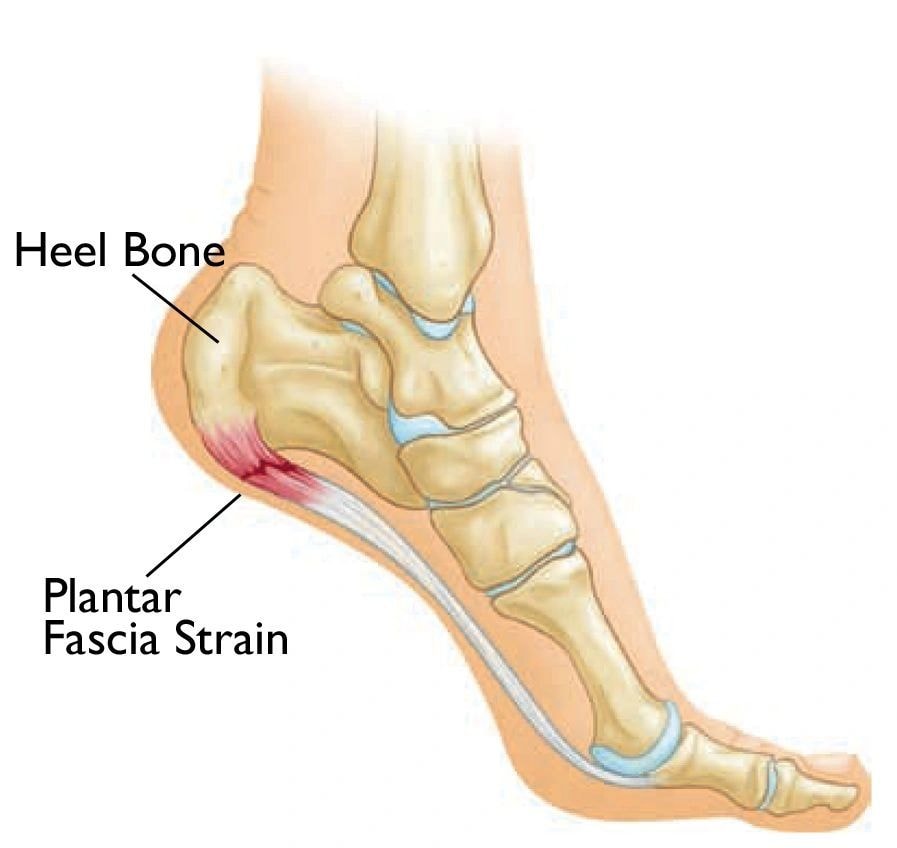
The plantar fascia is a thick band of tissue that runs along the bottom of your foot, connecting your heel bone to your toes. It acts like a shock-absorbing bowstring, supporting the arch of your foot. When this tissue is overstressed or inflamed, the result is plantar fasciitis.
What Causes It?
- Standing or walking on hard surfaces for long periods
- Sudden increases in physical activity (e.g., starting a new running program)
- Tight calf muscles or Achilles tendons
- Flat feet or high arches
- Wearing shoes with poor arch support or worn-out soles
- Being overweight, which increases pressure on the heel
- Age — plantar fasciitis is most common between ages 40 and 60
Symptoms
The hallmark symptom of plantar fasciitis is a stabbing pain near the heel, typically worst with the first steps after waking up or after sitting for a long time. The pain often improves with movement but may return after prolonged standing or after getting up from rest.
Diagnosis
Dr. Drucker diagnoses plantar fasciitis through a physical examination and a review of your symptoms and activity history. In some cases, X-rays or an in-office MRI may be used to rule out other causes of heel pain, such as a stress fracture or heel spur.
Treatment Options
- Stretching exercises for the plantar fascia and calf muscles
- Custom orthotics to redistribute pressure and support the arch
- Night splints to keep the foot in a stretched position while sleeping
- Anti-inflammatory medications or cortisone injections to reduce pain and swelling
- PRP (Platelet-Rich Plasma) injections to stimulate tissue repair in chronic cases
- Physical therapy to strengthen the foot and improve flexibility
- Extracorporeal shockwave therapy (ESWT) for stubborn cases that don't respond to other treatments
Surgery is rarely needed and is only considered after all conservative options have been exhausted over a period of 6 to 12 months.
Don't Ignore Heel Pain
Left untreated, plantar fasciitis can become a chronic condition that significantly limits your mobility and quality of life. The earlier you seek treatment, the faster and more completely you'll recover. If you're experiencing heel pain, schedule an appointment with Dr. Drucker today.
Ready to get relief?
Dr. Jordan Drucker, DPM — Board-Certified Podiatrist serving New York.
Book an Appointment